TL;DR: If a pipe has burst in your Farrell home, shut off the main water valve first, then cut power to any outlets near standing water before you touch anything. Call a licensed plumber to stop the leak and a water damage restoration company to start extraction and drying within hours. Waiting past 24 to 48 hours sharply raises the risk of mold and structural damage.
Water is spreading across your floor right now, a fitting let go overnight, or a supply line split while you were at work. You don’t need a long explanation of why this happened. You need to know what to touch, what to leave alone, and who picks up the phone first. Here’s the order that actually protects your home and your insurance claim.
What do you do in the first 60 seconds?
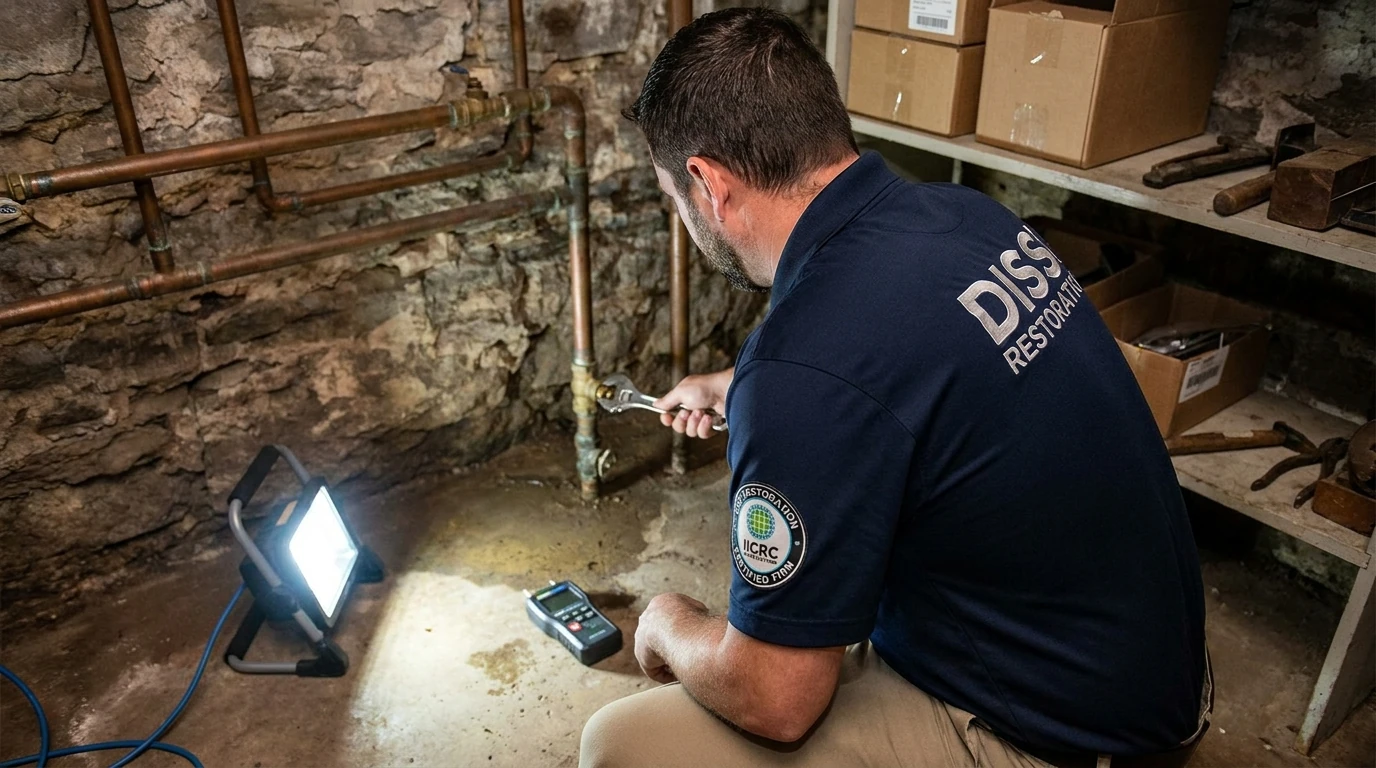
Shut off the water at the main shutoff valve, usually near the water meter or where the line enters the basement, then stop touching anything electrical if water is pooling near outlets or a breaker panel.
If the water is near any outlet, switch, or appliance, don’t wade through it. Flip the breaker for that area at the panel if you can reach it safely, or leave it alone and wait for a professional. Electrocution risk is real in standing water, even an inch of it.
Once the valve is off and the area is electrically safe, move what you can off the floor: furniture legs, rugs, boxes, anything fabric or paper. Photograph the damage before you move anything else. Those photos become your insurance documentation.
Who do you call first, a plumber or a restoration company?
Call both, but a licensed plumber handles the repair and a restoration company handles the water. A plumber stops the source of the leak; they don’t dry out your walls, pull up soaked flooring, or run the equipment that prevents mold. Those are two different jobs and most homeowners only think to call one.
Once the plumber has the line capped or repaired, the clock on drying starts. Structural materials, drywall, subfloor, framing, start growing mold within 24 to 48 hours of staying wet, per the ANSI/IICRC S500 standard for water damage restoration. For the extraction and drying half of this, in Farrell you can call DISS Restoration at (724) 981-1441; they run 24/7 and document the loss for your insurance adjuster as part of the job.
Don’t wait for the plumbing repair to finish before you schedule drying. A good plumber and a good restoration crew often overlap on site, the plumber working the pipe while the restoration crew sets extraction equipment in the next room.
What happens in the first 24 hours after a burst pipe?
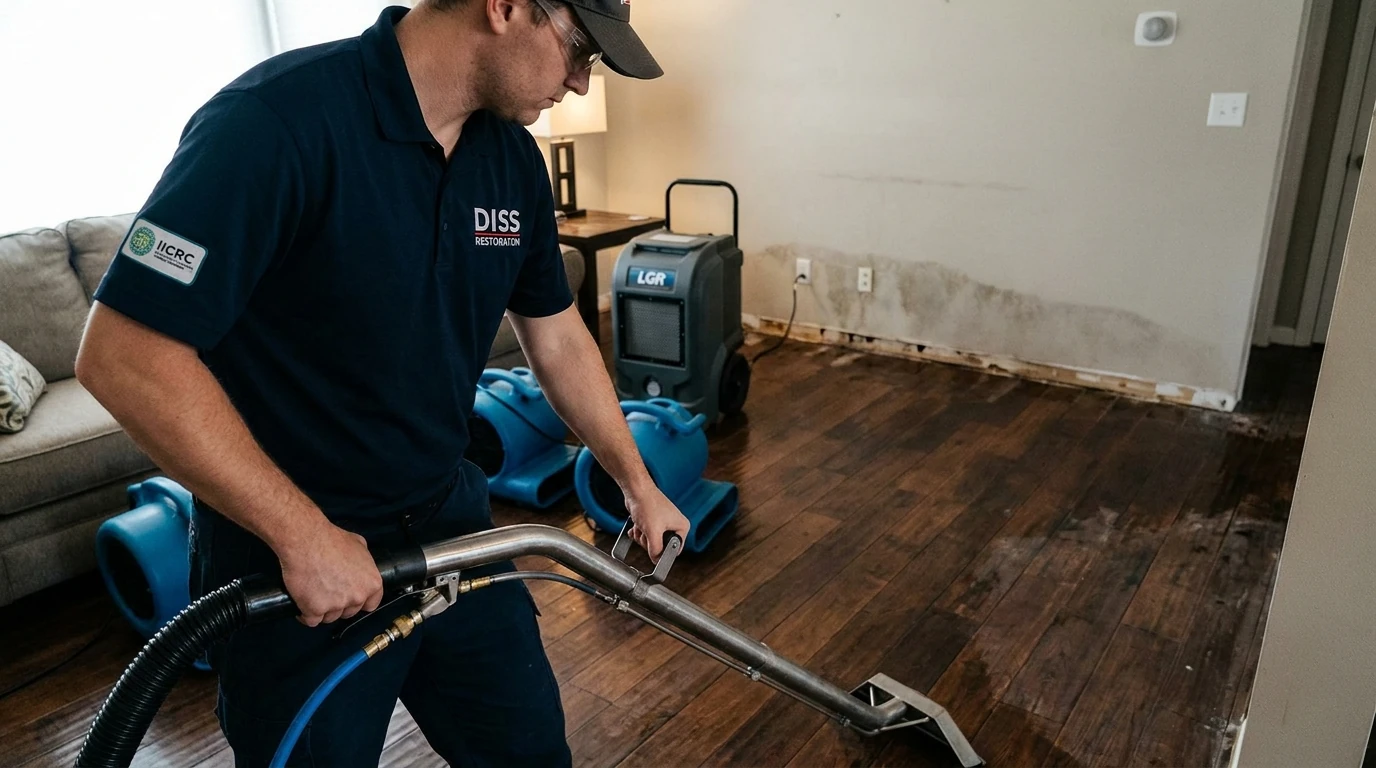
The first 24 hours are mostly extraction, assessment, and equipment setup, not repairs. A crew pulls standing water with truck-mounted extractors, checks moisture levels behind walls and under flooring with a moisture meter, then places air movers and dehumidifiers to start pulling moisture out of the structure.
Expect this general sequence:
- Water extraction from floors, carpet, and any pooled areas
- Moisture mapping, checking drywall, subfloor, and framing with a meter, not just a visual look
- Removal of materials that can’t be dried, soaked drywall below the flood line, ruined carpet pad, swollen baseboard
- Placement of air movers and dehumidifiers, usually left running for three to five days depending on how much material absorbed water
- Daily moisture checks until readings return to normal for the material type
Our related burst pipe emergency checklist walks through this step by step if you want the full breakdown, and our first 24 hours after water damage guide covers the documentation side in more detail.
Will homeowners insurance cover a burst pipe in Farrell?
Most homeowners policies cover sudden and accidental water damage from a burst pipe, but they typically exclude damage from a leak that was slow and ongoing before it was discovered. The distinction matters: sudden pipe failure is usually covered; a pipe that’s been seeping for months usually isn’t.
Your deductible applies before coverage kicks in, and the adjuster will want documentation: photos from before cleanup started, a written scope of the mitigation work, and moisture readings showing the extent of the damage. This is exactly what a restoration crew’s paperwork is for. For a broader rundown of what’s typically covered and what isn’t, see the Insurance Information Institute’s guide to homeowners coverage or our own plain-English breakdown of water damage coverage.
Don’t start tearing out materials before the adjuster has photos or a scope in hand, unless it’s necessary to stop further damage. Document first, then remove.
Getting the plumbing stopped and the drying started in the same day is what keeps a burst pipe a manageable repair instead of a mold remediation job three weeks later.
About DISS Restoration
Founded in 2021 and based in Farrell, Pennsylvania, this IICRC Certified Firm holds credentials in water restoration (WRT), structural drying (ASD), fire and smoke (FSRT), and mold remediation (AMRT). The crew is licensed and insured, runs 24/7, and handles water damage restoration, sewage cleanup, and storm damage response across the Shenango Valley and into the Youngstown, Ohio area. More on the water damage restoration service or get in touch to schedule an assessment.