TL;DR: Lead abatement is the permanent removal, encapsulation, or enclosure of lead-based paint hazards, required under EPA rules whenever work disturbs lead paint in a home built before 1978. Costs typically run $8 to $17 per square foot depending on the method, with whole-house jobs often landing between $10,000 and $30,000. Only an EPA Lead-Safe Certified firm can legally perform it, and the job ends with clearance dust testing before anyone moves back in.
If you’re renovating an older home in Niles, Ohio, or anywhere in the Mahoning and Shenango Valleys, and a pre-renovation inspection or a flaking windowsill turned up lead paint, you’re probably trying to figure out whether you need a quick lead-safe cleanup or full abatement, and what either one will actually cost. The answer depends on the condition of the paint, the scope of the renovation, and whether a child under six or a pregnant occupant lives in the home.
What Is Lead Abatement, Exactly?
Lead abatement is any activity designed to permanently eliminate lead-based paint hazards, not just contain them temporarily. That distinguishes it from routine “lead-safe work practices,” which manage dust during a renovation but leave the lead paint in place.
The three recognized abatement methods are removal (stripping paint down to bare substrate), encapsulation (sealing the surface with a specialized coating rated for lead paint), and enclosure (covering the surface permanently with a new material like drywall). The EPA’s lead program defines abatement specifically as work intended to be permanent, which is why it requires a certified Lead Abatement Firm and a certified Lead Abatement Supervisor on site, a higher bar than the EPA’s Renovation, Repair, and Painting (RRP) Rule that applies to ordinary remodeling.
Most homes built before 1978, when the federal government banned lead-based residential paint, have at least some lead paint somewhere: trim, windowsills, exterior siding, or old layers under newer coats. Rust Belt housing stock around Niles and the wider Mahoning Valley skews older, so this comes up often during window replacements, porch rebuilds, and kitchen demolitions.
How Much Does Lead Abatement Cost?
Most homeowners pay somewhere between $8 and $17 per square foot for professional lead abatement, with the final number driven by the method used and how much surface area is affected. A single room (windows, trim, and one wall) often falls in the $1,500 to $4,000 range. A full exterior repaint-and-strip job on an older two-story home can run $10,000 to $30,000 when you include containment, disposal, and clearance testing.
Encapsulation is typically the least expensive option since it seals the hazard rather than removing it, but it isn’t appropriate for surfaces that are already deteriorating or subject to friction and impact, like window tracks or stair treads. Removal costs more because it generates lead-contaminated waste that has to be bagged, documented, and disposed of as regulated material. Every job is different, and a reputable firm should give you a written scope and price after an on-site inspection, not a number over the phone.
What Does the Lead Abatement Process Actually Involve?
The process runs in five phases: inspection and risk assessment, containment, the abatement work itself, cleanup, and clearance testing. No occupant should re-enter a worked area until that last step clears.
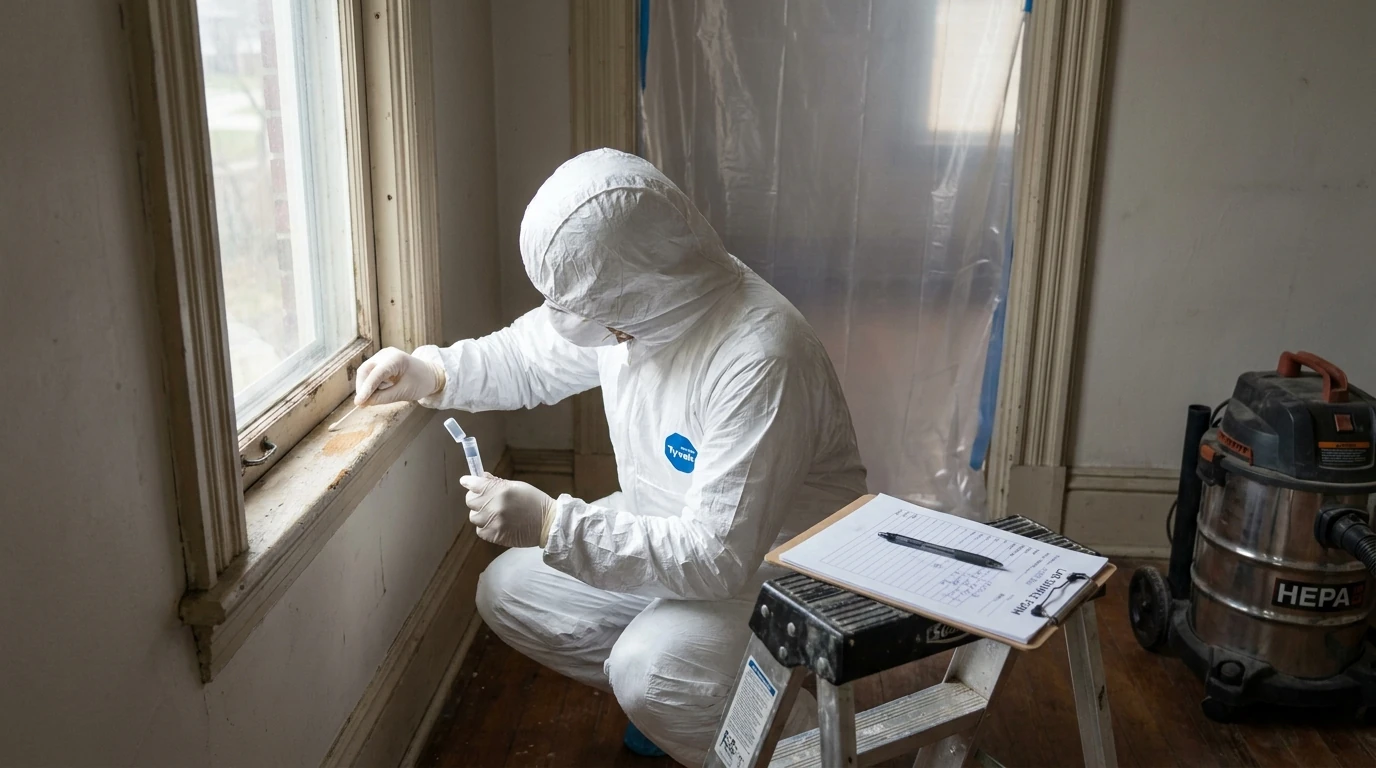
- Inspection and risk assessment. A certified risk assessor identifies which surfaces are hazards (not just which ones contain lead) using an XRF analyzer or paint-chip lab samples.
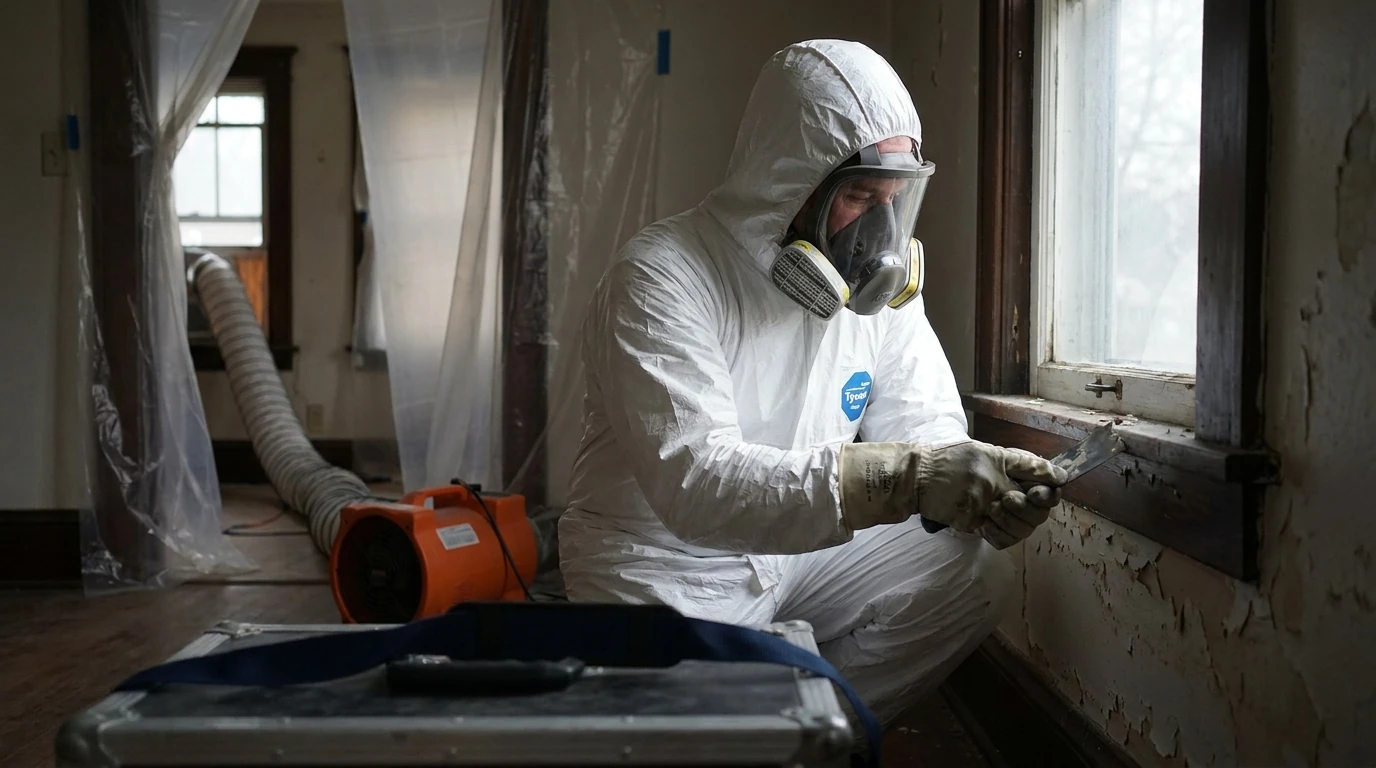
- Containment setup. Crews seal the work area with poly sheeting, tape off HVAC vents, and often run the space under negative pressure with a HEPA air scrubber so dust doesn’t migrate to the rest of the house.
- Abatement. Removal, encapsulation, or enclosure, performed by workers in full personal protective equipment: Tyvek suits, P100 respirators, and double gloves, following EPA work-practice standards.
- Cleanup. HEPA vacuuming of every surface, followed by wet-wiping, is standard. Dry sweeping or sanding without HEPA filtration is one of the most common code violations in this trade.
- Clearance testing. An independent certified inspector collects dust wipe samples and sends them to an accredited lab. The space isn’t cleared for reoccupancy until results come back under EPA clearance levels.
Who Needs Lead Abatement and When Is It Required?
Lead abatement is legally required when a risk assessment identifies a lead hazard in a pre-1978 home, especially one occupied by a child under six, and it’s often triggered by a real estate transaction, a lead poisoning case, or a government-funded renovation program. It’s distinct from the lower bar that applies to a contractor simply renovating an older home.
If you’re just replacing windows or doing a kitchen remodel in a pre-1978 house with no identified hazard, the EPA’s RRP Rule governs the work: the contractor must be lead-safe certified and follow dust-containment practices, but full abatement isn’t automatically required. Abatement becomes mandatory when a hazard has been formally identified, commonly after a child tests positive for elevated blood lead levels, during HUD-assisted housing rehab, or when a home inspection for a sale flags deteriorated lead paint. Landlords and property managers in older housing stock across the Youngstown and Sharon metro areas should also know that several local housing authorities require clearance testing before re-leasing a unit where a hazard was found.
Who Should You Call for Lead Abatement Work?
You need a firm that holds EPA Lead-Safe Certified Firm status and can document it, not just a general contractor willing to take the job. DISS Restoration holds that certification and handles the containment, demolition, and cleanup side of lead paint abatement and lead-safe renovation work for homes across Niles and the surrounding Mahoning and Shenango Valley communities. Call DISS Restoration at (724) 981-1441 to schedule a lead hazard assessment before you open any walls, strip paint, or start demolition.
Ask any firm you’re considering for its EPA certification number and whether the quote includes third-party clearance testing. Abatement that skips independent clearance isn’t abatement you can legally document as complete, which matters if you’re selling the home or clearing it for a tenant with young children.
About DISS Restoration
Founded in 2021, the company is EPA Lead-Safe Certified and holds additional IICRC credentials across water, fire, mold, and structural drying. It’s licensed and insured and serves Youngstown, Niles, Warren, and surrounding communities in the Mahoning and Shenango Valleys. The company’s work spans hazard containment, demolition, and reconstruction scopes.