
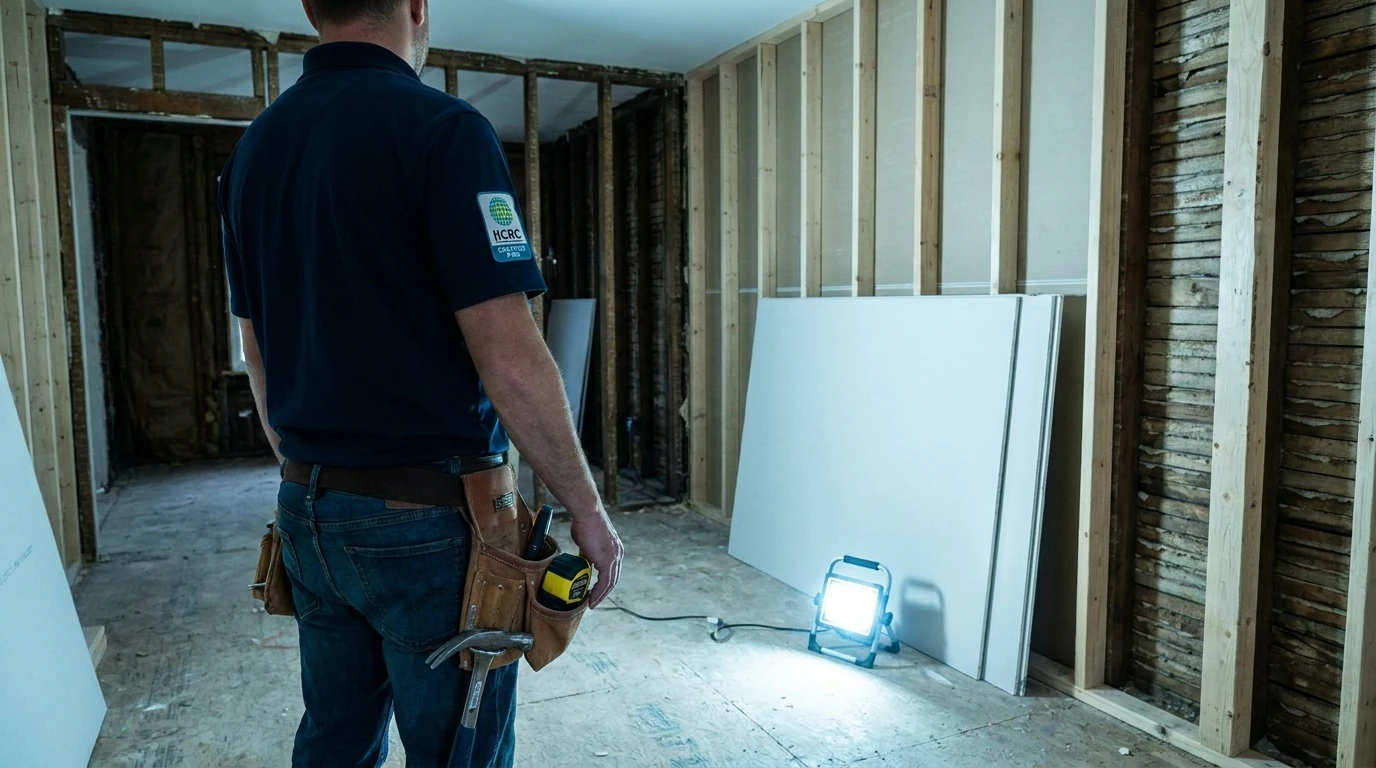
TL;DR: Reconstruction is the rebuild phase of a restoration job: the drywall, flooring, trim, cabinetry, and framing work that puts a property back together after water, fire, or storm damage has been mitigated and removed. It happens after demolition and drying, not instead of them. In Farrell, PA, reconstruction often involves materials and framing methods common to the area’s early-1900s steel-town housing stock. A reconstruction contractor should carry the same insurance paperwork and documentation habits as the mitigation crew that came before them.
If your insurance adjuster just approved the demo phase of a water or fire claim in Farrell and you’re now looking at open studs, exposed subfloor, or a gutted kitchen, you’re at the point where “mitigation” ends and “reconstruction” begins. That transition confuses a lot of homeowners, partly because some companies handle both phases and some only do one. Knowing what reconstruction actually covers helps you read your scope of work and catch anything missing before the rebuild starts.
What does “reconstruction” mean after property damage?
Reconstruction is the physical rebuilding of a structure after the damaged materials have been removed and the space has dried out or been decontaminated. It covers framing repairs, drywall, insulation, flooring, paint, trim, cabinetry, and fixture reinstallation.
It’s the second half of a two-phase job. Phase one, mitigation, stops the damage from spreading: water extraction, structural drying, soot cleaning, or mold containment. Phase two, reconstruction, rebuilds what had to come out. A plumbing leak that soaked a kitchen might need mitigation for a week and reconstruction for a month, because cabinets, flooring, and lower drywall usually get cut out to dry the wall cavities properly, per the IICRC S500 water damage standard.
Some contractors advertise “reconstruction” to mean any general repair work, unrelated to an insurance claim. In a restoration context, though, it specifically means rebuilding after a documented loss, which is why the paperwork trail matters as much as the carpentry.
How is reconstruction different from a remodel?
Reconstruction restores a space to its pre-loss condition; a remodel changes the space beyond that. Reconstruction is typically covered, at least in part, by a homeowners or commercial property policy. A remodel, choosing a different cabinet layout or upgrading finishes, generally is not.
The line gets blurry in practice. If your kitchen had laminate counters before a fire and you want quartz during the rebuild, the insurance scope will usually only pay to replace what was there, laminate. You can “betterment” upgrade and pay the difference out of pocket, but that’s a remodel decision layered on top of a reconstruction claim, not part of the claim itself.
Code upgrades are a separate category. If your Farrell home has knob-and-tube wiring or an outdated electrical panel behind a damaged wall, and current code requires an upgrade before the wall can be closed, that’s often covered under an “ordinance or law” provision in the policy, not treated as betterment. Worth asking your adjuster directly rather than assuming either way.
What does the reconstruction process actually involve?
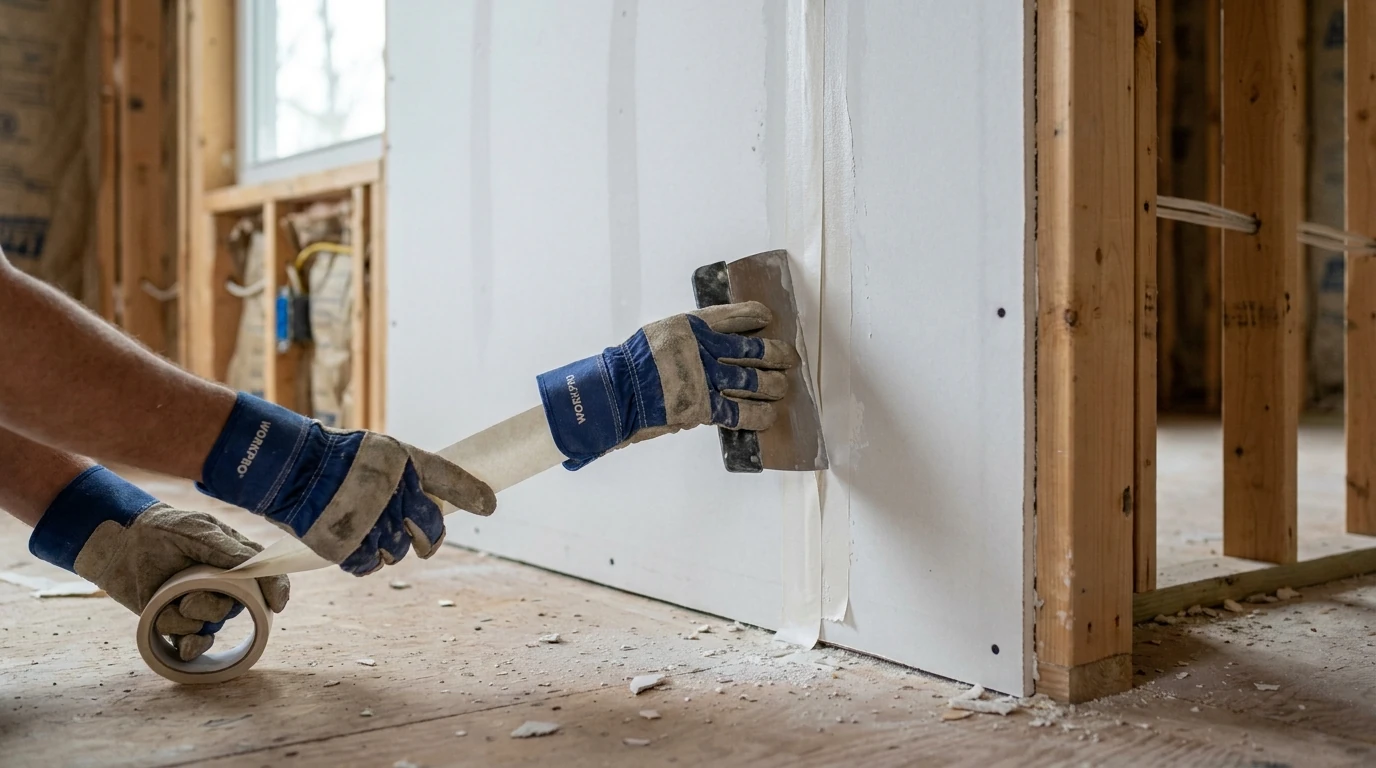
Reconstruction follows a sequence: framing and structural repairs first, then the systems behind the walls, then the finishes, in that order, because each layer depends on the one before it passing inspection.
- Structural repairs. Replacing any studs, joists, or subfloor that were cut out or compromised. In older Shenango Valley housing, this sometimes means matching balloon-frame construction rather than modern platform framing.
- Rough-in systems. Electrical, plumbing, and HVAC work that was disturbed during demo gets inspected and reconnected before walls close.
- Insulation and drywall. New insulation goes in where old insulation was removed (wet insulation is almost always a total loss), followed by drywall hang, tape, and texture.
- Paint and trim. Primer, paint, baseboard, casing, and any millwork that matches the home’s existing trim profile.
- Flooring and fixtures. Final flooring installation, cabinet reset or replacement, and reinstalling or replacing light fixtures, outlets, and hardware.
- Final walkthrough. A punch list comparing the finished space against the approved scope of work, signed off before the job closes.
A straightforward single-room reconstruction after a water loss might run two to four weeks. A whole-floor rebuild after a fire can run two to four months, largely driven by material lead times and how many trades have to sequence through the space.
Who should handle reconstruction after an insurance claim?
The contractor handling your reconstruction should be comfortable working directly from an insurance scope of work and documenting change orders as they happen, not just estimating off a verbal description. That protects you if the rebuild turns up something the original scope missed, like hidden framing damage behind a wall that looked fine until it was opened up.
Some homeowners use one company for mitigation and a separate general contractor for the rebuild. Others prefer a single company that does both, since it removes a handoff point where details can get lost between the drying report and the rebuild scope. If you’re in Farrell or the surrounding Shenango Valley and want one point of contact through both phases, DISS Restoration handles mitigation and reconstruction under the same scope of work, which keeps the insurance documentation consistent from the first inspection to the final walkthrough.
Whoever you choose, ask to see their general contracting license and confirm they’ll provide a written, itemized scope before signing anything. For a closer look at what the rebuild stage specifically involves, see Remodel After Restoration: What to Know Before You Rebuild.
A reconstruction job done right should leave you with a space that looks like the damage never happened, backed by a paper trail that holds up if the insurer has questions later. Getting a written scope before demo even starts is the single best way to avoid disputes once the rebuild is underway.
About DISS Restoration
DISS Restoration is an IICRC Certified Firm serving Farrell, PA and the surrounding Shenango Valley since 2021. Their technicians hold IICRC WRT, FSRT, AMRT, and ASD credentials, and the company is EPA Lead-Safe Certified, relevant work in a region with a lot of pre-1978 housing stock. DISS Restoration is licensed and insured and handles water, fire, storm, mold, and reconstruction work, including the general contracting phase that rebuilds a property after mitigation is complete.
Need help now? Call DISS Restoration at (724) 981-1441.