TL;DR: Sewage damage restoration removes contaminated Category 3 water, discards materials that can’t be disinfected, and dries the structure to the IICRC S500 standard. A typical sewage backup job runs $1,500 to $7,000 or more depending on how far the water spread and whether drywall, carpet or insulation need to come out. Most homeowners policies exclude sewer backups unless you’ve added a water backup endorsement, so documenting the loss correctly matters as much as the cleanup itself.
If your basement floor drain just backed up, or a toilet overflowed and the water keeps rising instead of draining, you’re dealing with a Category 3 loss, the most contaminated classification in professional water damage work. This isn’t something you mop up with a shop vac and a box fan. Sewage carries bacteria, viruses and parasites that can make a household sick within hours of contact. Farrell’s older housing stock, much of it built when the local steel industry was still running, often has clay or cast-iron sewer laterals well past their service life, which is part of why backups are common across the Shenango Valley. Here’s what the restoration process actually involves, and what your insurance is likely to cover.
What Does Sewage Damage Restoration Actually Involve?
Sewage damage restoration means extracting contaminated water, removing materials that can’t be disinfected, applying antimicrobial treatment, and drying the structure to the ANSI/IICRC S500 standard, a process that typically takes 3 to 7 days depending on how far the water traveled and what it touched.
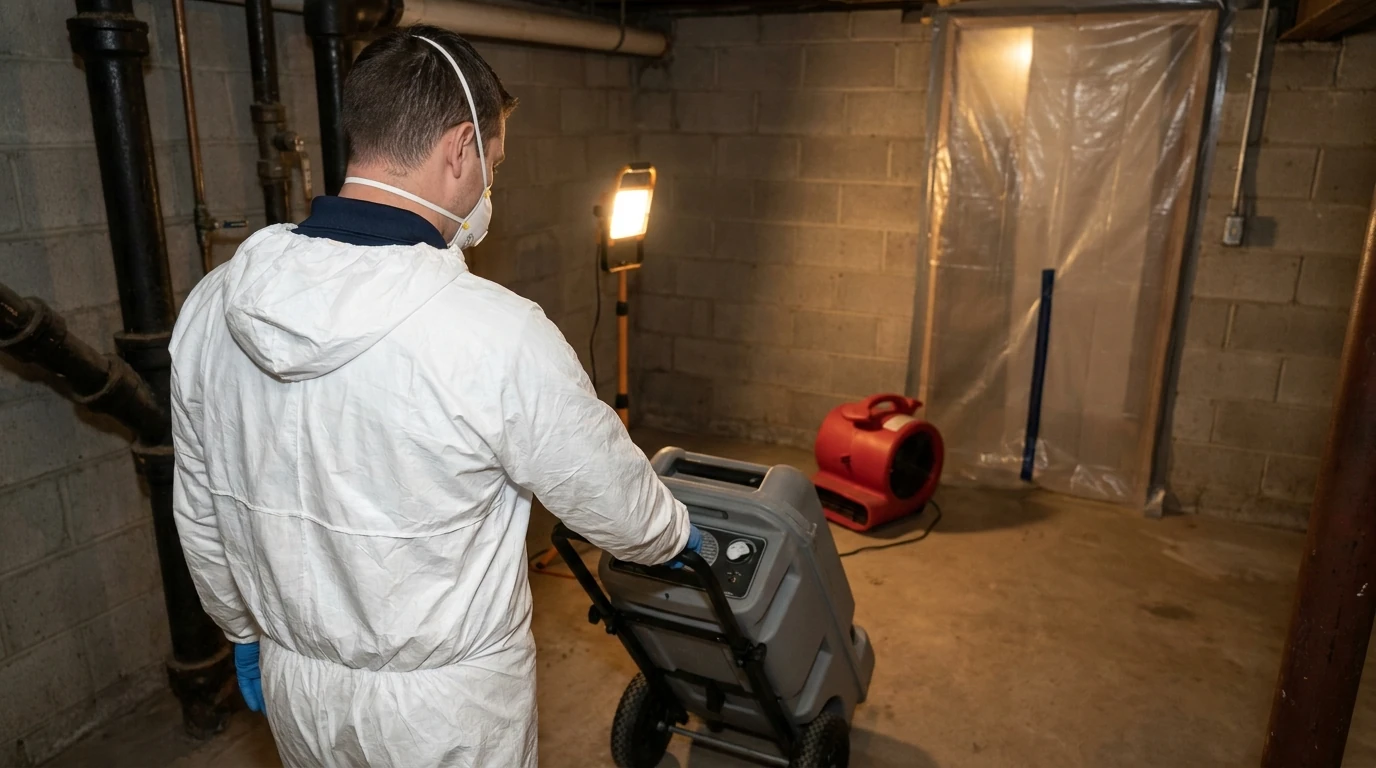
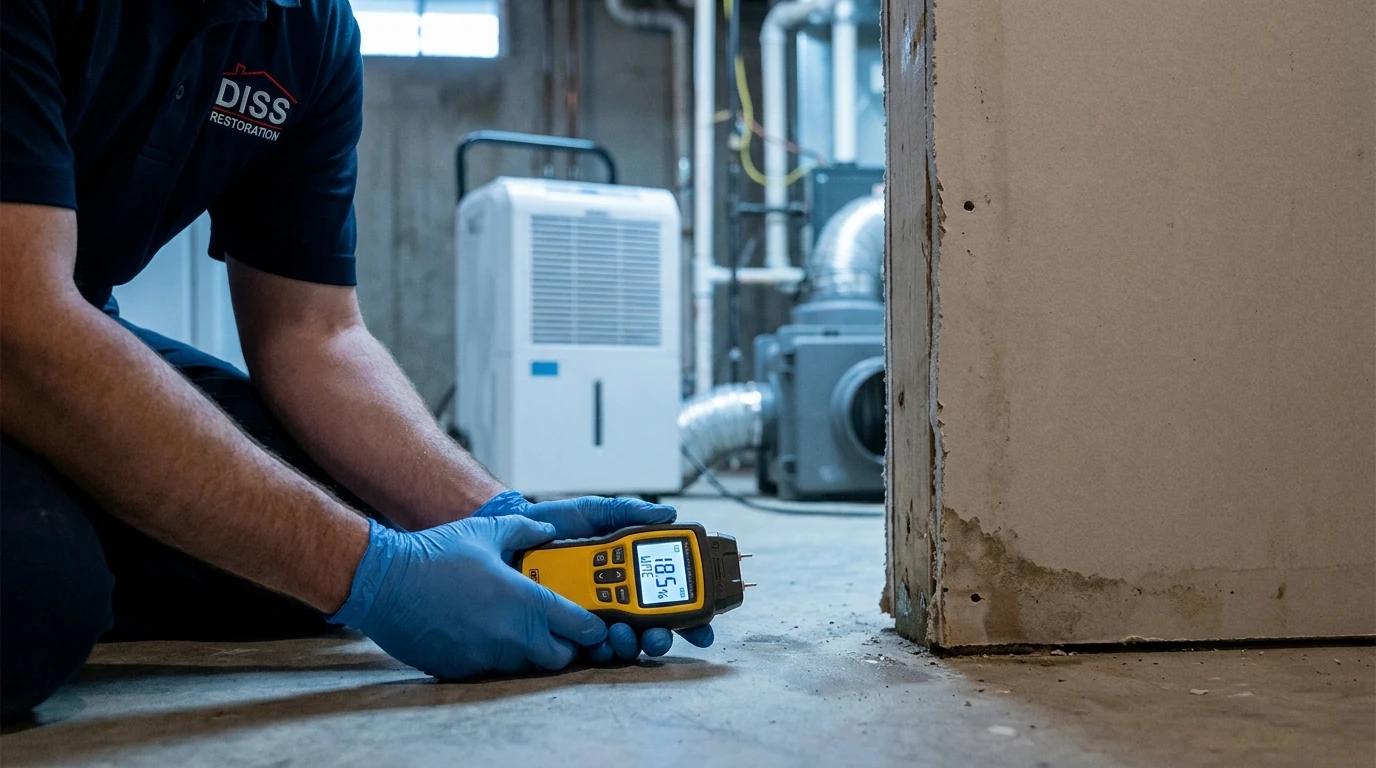
The work usually runs in this order: contaminated water gets extracted first, using equipment dedicated to Category 3 losses and never mixed with clean-water jobs. Porous materials that absorbed sewage, carpet, carpet pad, drywall up to the waterline, baseboards and often subflooring, get removed and discarded rather than dried in place, because they can’t be fully disinfected. Non-porous surfaces like concrete, tile and sealed wood get cleaned and treated with an EPA-registered antimicrobial. Air movers and dehumidifiers then run until moisture readings in the studs and subfloor return to normal, which a technician checks with a moisture meter rather than guessing by feel or smell.
Why Can’t I Just Clean Up a Sewage Backup Myself?
Category 3 water contains sewage, bacteria and sometimes chemical contaminants, and the IICRC S500 standard calls for containment, PPE and antimicrobial treatment most households don’t have on hand, which is why DIY cleanup often spreads contamination instead of removing it.
The health risk is the real issue. Sewage can carry E. coli, hepatitis A and intestinal parasites, and a wet shop vac or a mop bucket becomes a vector that tracks contamination into rooms that were never affected. The OSHA guidance on flood and water cleanup outlines why contaminated-water work calls for gloves, eye protection and respiratory protection, not a towel and a window fan. Porous materials are the other problem: once sewage soaks into drywall or carpet pad, cleaning the surface doesn’t remove what’s inside it, so those materials have to come out.
Will Homeowners Insurance Cover Sewage Cleanup?
Most standard homeowners policies exclude sewer and drain backups unless you’ve added a water backup, sometimes called a sewer or sump endorsement, a separate rider that typically runs $50 to $100 a year and caps payouts somewhere between $5,000 and $25,000.
Without that endorsement, a sewer backup is usually treated as a maintenance issue, not a covered peril, even though it feels exactly as sudden and disruptive as a burst pipe. Check your declarations page for a line item mentioning water backup or sump overflow before assuming anything is covered. The Insurance Information Institute’s guide to what standard homeowners insurance covers breaks down how backup coverage differs from the base policy, and our own guide to homeowners insurance and water damage walks through documentation that helps either way. Photograph the damage before any cleanup starts and keep every receipt; adjusters lean heavily on timestamped evidence for Category 3 claims.
What Should I Do in the First Hour After a Sewage Backup?
In the first hour, keep people and pets out of the affected area, shut off the water source if one is actively feeding the backup, open windows for ventilation if weather allows, and call a restoration company experienced in Category 3 water before you touch anything.
Don’t run fans aimed at the standing water, since that can aerosolize contaminants into the air you’re breathing. Don’t flush more water down the affected drain while you’re trying to diagnose the source. Take photos of the standing water and any items it touched before cleanup begins, since that documentation protects an insurance claim either way. In Farrell and across the Shenango Valley, DISS Restoration handles the Category 3 extraction, disinfection and drying, along with the documentation an adjuster will ask for.
A sewage backup is one of the few restoration situations where waiting even a few extra hours makes the job bigger. Contaminated water keeps spreading through flooring and framing the longer it sits, which is why getting extraction started quickly matters more here than with a clean-water leak. If you’re mid-backup right now, shut off what you can safely reach and get a restoration crew scheduled before you start cleanup on your own.
About DISS Restoration
Founded in 2021, the company is an IICRC-certified restoration firm serving Farrell, PA and the surrounding Shenango and Mahoning Valley region. Crews hold IICRC certifications in water restoration (WRT), structural drying (ASD), fire and smoke restoration (FSRT) and mold remediation (AMRT), and are OSHA trained for contaminated-water work. The business is licensed and insured, operates 24/7, and carries a 4.6 average rating across 84 Google reviews.
Need help now? Call DISS Restoration at (724) 981-1441.