
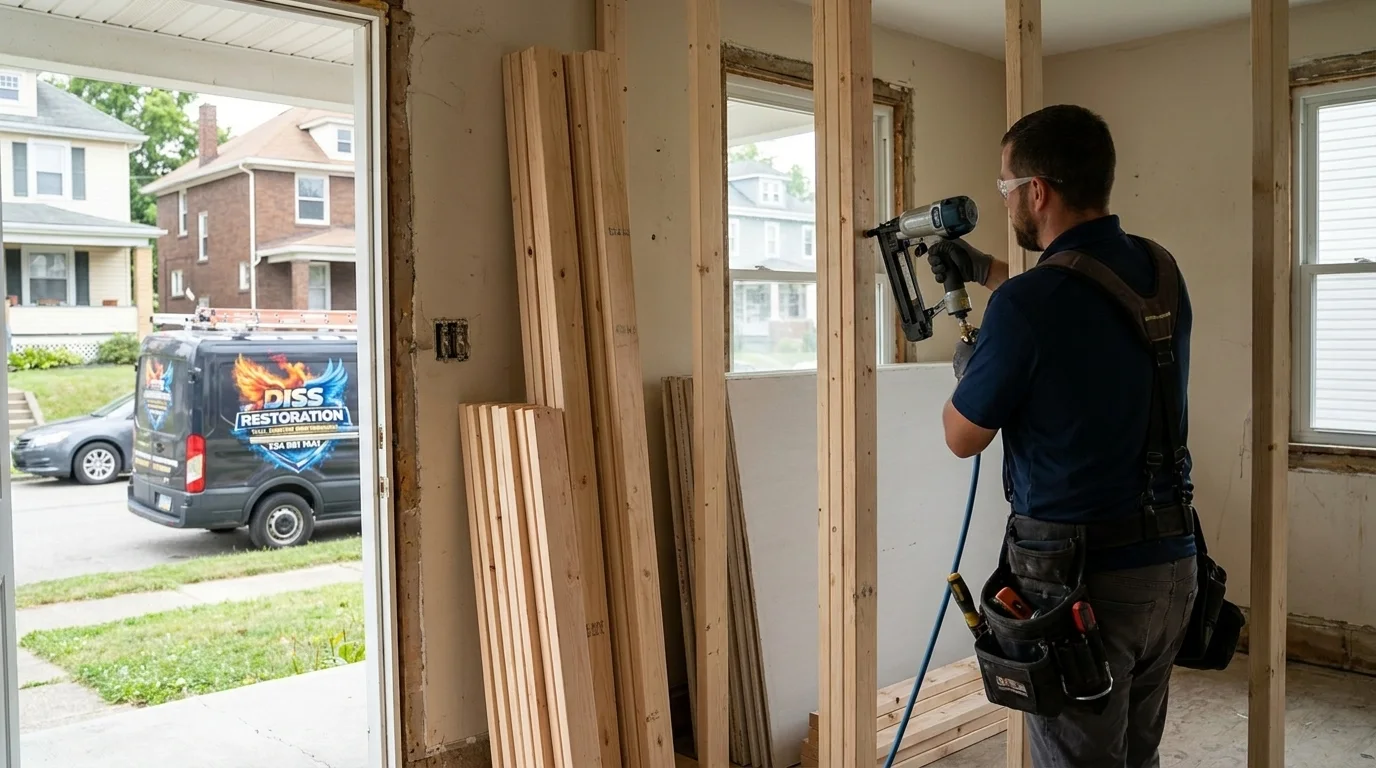
Reconstruction Services in Pittsburgh
24/7 reconstruction services in Pittsburgh, PA. IICRC-certified, insurance billing accepted. Call (724) 981-1441.
Our IICRC-certified technicians are dispatched from our Farrell, PA headquarters and are typically on-site in Pittsburgh within 60 minutes of your call.
Reconstruction after a fire, storm, or major water loss in Pittsburgh means rebuilding into a city where the housing stock, the hillside lots, and the permitting process all shape how the work gets done. DISS Restoration handles the structural rebuild phase after the damage has been assessed, whether that’s reframing a fire-damaged section of an older brick home or replacing subfloor and framing lost to a basement flood, with the same crew that handled mitigation carrying the project through to a finished, code-compliant space.
Why Pittsburgh Properties Need Careful Reconstruction Planning
Pittsburgh’s residential stock skews old. A large share of the city’s homes were built before 1950, many as balloon-frame or masonry row houses on steep, narrow lots across the city’s hillside neighborhoods. That construction style and topography both affect reconstruction. Balloon framing runs wall cavities uninterrupted from basement to attic, which means fire and smoke damage frequently travels further through the structure than the visible char suggests, and a full accounting of what needs to come out often expands once demo starts. Steep lots and retaining walls common throughout the city also mean foundation and grading work after storm or flood damage sometimes requires more than a straightforward rebuild, since water finds paths along hillside grading that flatter cities don’t deal with. Winters here bring repeated freeze-thaw cycles, which stress masonry foundations and brick veneer that were already compromised by water intrusion, so reconstruction scopes sometimes grow once a contractor opens up a wall and sees what the freeze-thaw cycle has done underneath.
Our Reconstruction Process in Pittsburgh
We start with a structural assessment that documents what’s salvageable and what isn’t, photographing and measuring affected framing, subfloor, and masonry before anything is removed. From there, demolition clears damaged material down to sound structure, framing and subfloor are replaced to match existing construction where possible, and rough-in work for electrical and plumbing is coordinated before drywall and finishes go back. For older Pittsburgh homes, that often means working around balloon-frame cavities, plaster walls, or masonry that modern crews see less often elsewhere, and planning the rebuild sequence around what that construction type actually allows. Every phase is documented for the insurance file as it happens, not reconstructed from memory after the fact.
Permitting and Code Considerations
Structural reconstruction in Pittsburgh generally requires permits through the city’s permitting and inspections office, and that review adds a step that doesn’t exist on a simple drywall patch. Older homes being rebuilt after fire or storm damage sometimes trigger code upgrades that weren’t required when the home was originally built, particularly around electrical service and fire separation. We build permit lead time into the project schedule from the start rather than treating it as a surprise delay, and we handle the inspection coordination directly so homeowners aren’t the ones chasing down scheduling with the city.
Pittsburgh Insurance Coordination
Reconstruction is almost always the largest line item in a property damage claim, and adjusters scrutinize it closely. We itemize the scope with photos, measurements, and material specifications tied to local labor and material costs rather than a generic estimate, and we communicate directly with the adjuster assigned to the claim so the homeowner isn’t relaying technical details back and forth. For larger losses involving multi-unit buildings or older commercial structures common in Pittsburgh’s business districts, that documentation tends to matter even more, since those claims draw more questions from carriers.
Local note
Many Pittsburgh homes built before 1940 use balloon-frame construction, where the wall cavity runs uninterrupted from the basement sill to the attic rafters. After a fire, that open path lets heat and smoke migrate well beyond the room where the fire started, which is why reconstruction scope on these homes often extends past what the visible burn pattern first suggests. We open up and inspect those cavities before closing anything back up, rather than assuming the damage stopped at the wall where the fire was contained.
If your Pittsburgh property needs structural reconstruction after fire, storm, or water damage, DISS Restoration coordinates the rebuild from initial assessment through final inspection, working within the city’s permitting requirements and the realities of its older building stock. Call (724) 981-1441 to schedule an assessment and start the rebuild process.
Serving Pittsburgh from our Farrell headquarters — ★ 4.6 · 87 Google reviews
“First class customer service. The work was done in a timely fashion and to our satisfaction. The workers were polite and helpful.” — Ron, October 2026Read our reviews on Google →
Reconstruction Services in Pittsburgh: Service Coverage
Frequently Asked Questions
How fast can you arrive for reconstruction services in Pittsburgh?
Does Pittsburgh's hillside topography affect how you approach structural reconstruction?
Are older Pittsburgh homes with balloon-frame construction more complicated to rebuild after fire damage?
How does the City of Pittsburgh's permitting process affect reconstruction timelines?
What happens when freeze-thaw cycles have damaged a foundation we're reconstructing?
Do you coordinate reconstruction costs with insurance adjusters for Pittsburgh properties?
Reconstruction Services response in Pittsburgh
Most Pittsburgh calls see a technician on-site within 60 minutes from our Farrell headquarters.