24/7 Emergency Water Removal & Cleanup in Youngstown
24/7 emergency water removal & cleanup in Youngstown, OH. IICRC-certified, insurance billing accepted. Call (724) 981-1441.
Our IICRC-certified technicians are dispatched from our Farrell, PA headquarters and are typically on-site in Youngstown within 60 minutes of your call.
Standing water in a Youngstown basement or first floor? Call (724) 981-1441 now. We answer 24/7, and emergency water removal in a city built on a river valley and filled with early-20th-century housing stock is a different job than it is in a newer suburb. Clay soil, cast iron plumbing that’s outlived its design life, and basements dug for a different climate all change how fast water spreads and how long materials stay saturated once it does.
Youngstown’s older neighborhoods were largely built during the steel industry boom, which means a lot of the housing stock predates modern waterproofing codes. Fieldstone and parged block foundations were common practice then, and decades later those same foundations let groundwater in through hairline cracks after a hard freeze-thaw cycle or a fast snowmelt off the Mahoning River watershed. Combine that with cast iron supply lines and clay or cast iron sewer laterals original to many Mahoning County properties, and you get two common calls: a slow seep that’s been building for days before anyone notices the smell, and a sudden pipe failure that dumps gallons in minutes.
Why Youngstown Properties See Water Damage Emergencies
The region’s freeze-thaw winters are hard on plumbing that’s already decades old. Pipes that run through uninsulated crawlspaces or exterior walls in pre-1960 construction are prone to splitting when temperatures swing, and a burst usually isn’t discovered until someone walks into standing water on a basement floor. Add in the clay-heavy soil common across the Mahoning Valley, which drains slowly and holds moisture against foundation walls longer after storms, and basement seepage becomes a recurring issue for homes that were dry for years and then suddenly aren’t.
Our Emergency Water Removal Process in Youngstown
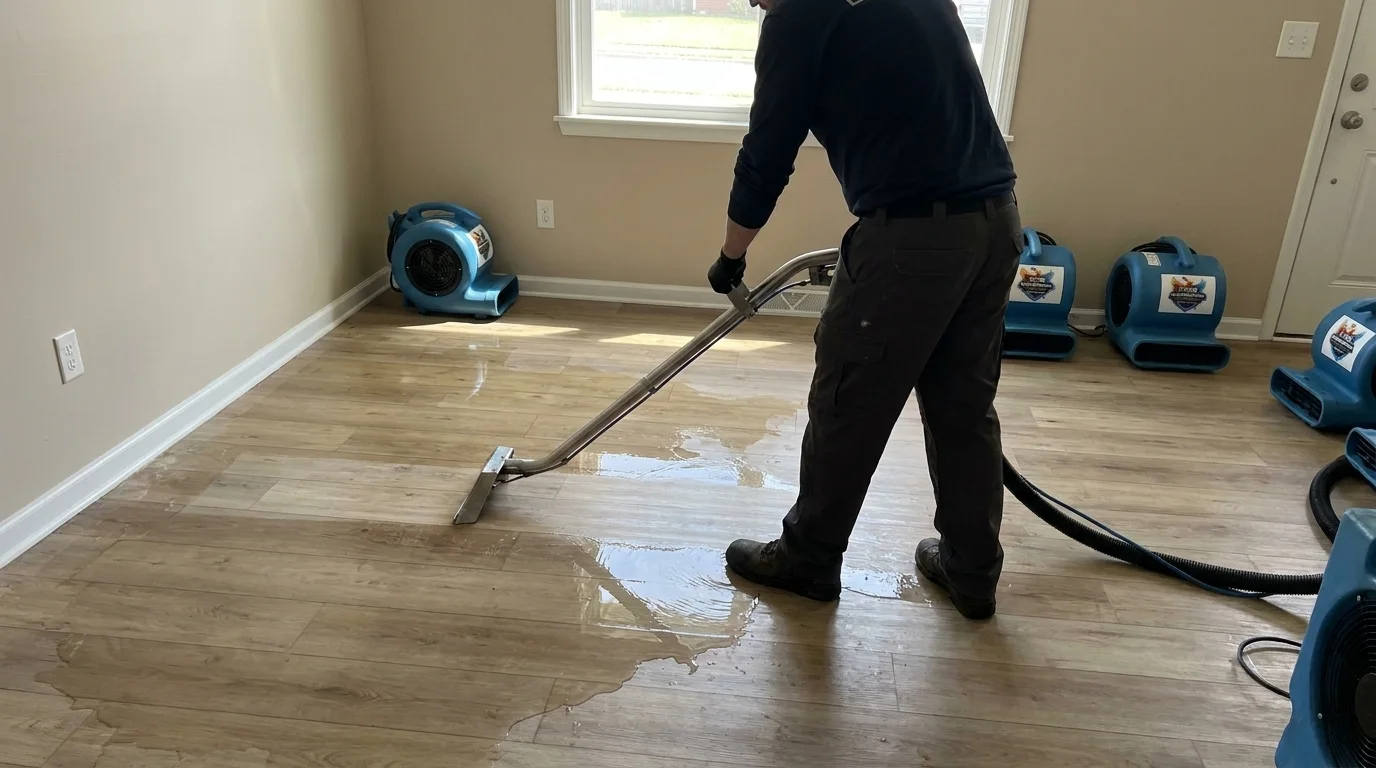
We start with extraction, pulling standing water with truck-mounted or portable pumps depending on how the property is accessed, then move to moisture mapping with meters to find out how far water has traveled under flooring and into wall cavities. In older Youngstown homes that still have plaster walls or original hardwood subflooring, we adjust drying targets because those materials hold and release moisture more slowly than drywall and engineered flooring. Air movers and dehumidifiers are set per the IICRC S500 drying standard, and we log readings daily until materials hit a dry standard rather than guessing by feel.
Youngstown Insurance Coordination
Most of the claims we see locally involve either a sudden pipe failure, which is typically covered, or gradual seepage, which carriers often scrutinize more closely. We photograph and document the source and extent of the water before any demolition starts, which matters in Mahoning County claims where adjusters want to see clear evidence distinguishing a covered loss from long-term wear. We can work directly with most major carriers so the paperwork isn’t something a homeowner has to manage alone mid-emergency.
Local note
A lot of Youngstown’s older east and south side homes still have the original clay tile sewer laterals, and those lines are prone to root intrusion and partial collapse long before a homeowner notices a slow drain. When a sewage backup shows up alongside clean water intrusion, we treat the whole affected area under category 3 protocols rather than assuming it’s a simple fresh-water cleanup, because mixed losses are common in this housing stock and treating it as straightforward water damage would miss contamination that needs a different cleaning standard.
Water sitting in a Youngstown basement for more than a day or two starts moving into framing and subfloor, and mold colonization can begin well before that if conditions are warm and humid. Whether it’s a failed sump pump during a spring thaw or a supply line that split overnight, calling for emergency water removal and cleanup as soon as you find it gives us a better shot at saving flooring, drywall, and insulation instead of tearing it all out. Reach DISS Restoration at (724) 981-1441 for water cleanup anywhere in Youngstown, and we’ll get a crew moving toward your address.
Serving Youngstown from our Farrell headquarters — ★ 4.6 · 87 Google reviews
“Excellent communication and professionalism all-around. High-quality and very fast completion of the job” — Michael, October 2026Read our reviews on Google →
Emergency Water Removal & Cleanup in Youngstown: Service Coverage
Frequently Asked Questions
How fast can you arrive for emergency water removal & cleanup in Youngstown?
How does Youngstown's older housing stock affect emergency water removal?
Are Youngstown basements more prone to water intrusion?
Do you handle both clean water and sewage backups in Youngstown homes?
What equipment do you use for standing water removal?
Will my insurance cover emergency water cleanup in Youngstown?
Emergency Water Removal & Cleanup response in Youngstown
Most Youngstown calls see a technician on-site within 60 minutes from our Farrell headquarters.