
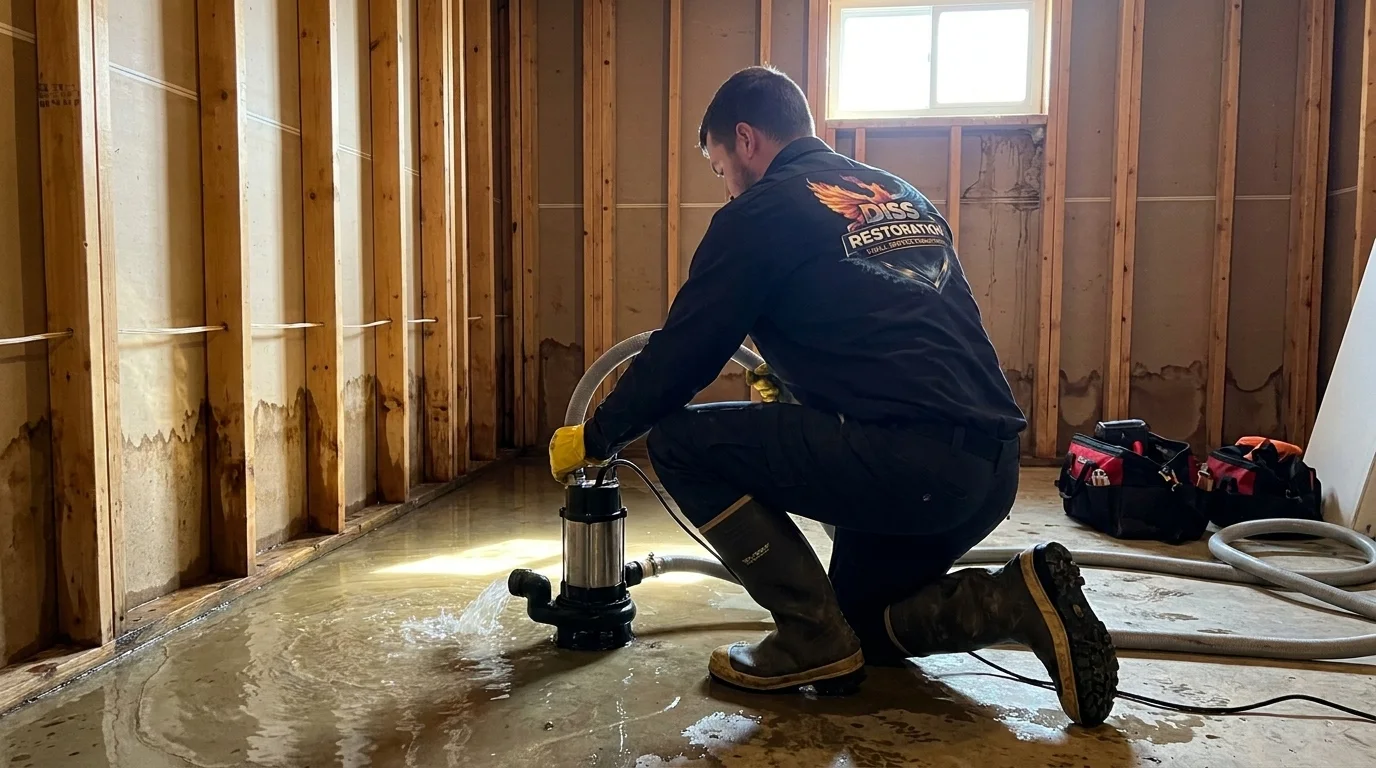
24/7 Emergency Basement Flooding Cleanup in Farrell
24/7 emergency basement flooding cleanup in Farrell and surrounding areas. IICRC-certified, insurance billing accepted. Call (724) 981-1441.
Basement flooding in Farrell? Don’t wait for standing water to find its own way out. We answer 24/7, and every hour that water sits against drywall, framing, and flooring is an hour closer to mold colonization and structural damage that costs far more to fix than the original flood.
A flooded basement rarely announces itself cleanly. Sometimes it’s a sump pump that quit during a storm, sometimes it’s groundwater pushing through a hairline foundation crack, sometimes it’s a sewer line backing up after heavy rain overwhelms the system. Each of those scenarios changes how we treat the water, what we remove, and how fast mold becomes a real risk rather than a theoretical one.
What basement flooding cleanup actually involves
Basement cleanup starts with identifying the water category before anything else happens. Clean groundwater intrusion is handled differently than water that’s touched sewage or has been sitting long enough to grow bacteria. We use submersible and truck-mounted pumps to remove standing water, then move into extraction from carpet, pad, and any porous flooring. Below-grade spaces hold moisture differently than upper floors: concrete and masonry absorb and release water slowly, which is why a basement that looks dry on day two can still read wet with a moisture meter on day five. Drying typically runs several days to a week or more depending on how much of the space was affected and whether the walls are finished or bare block.
Our process
- Water categorization and safety check. We identify whether the water is clean, gray, or black before extraction begins, since that determines what gets removed versus dried in place.
- Extraction. Pumps and wet vacuums remove standing water first, followed by extraction from carpet, pad, and saturated flooring materials.
- Material removal where needed. Baseboards, drywall below the flood line, and insulation that can’t be dried are cut out to stop wicking and trapped moisture behind the wall cavity.
- Structural drying and moisture mapping. Air movers and dehumidifiers are placed based on room geometry, and we track moisture content in the concrete, framing, and remaining drywall with meters until readings hit a dry standard.
- Antimicrobial treatment when warranted. For gray or black water categories, affected surfaces get treated before rebuild work starts.
What separates a good basement flooding response from a bad one
The most common mistake isn’t the extraction, it’s stopping too soon. A basement floor can feel dry to the touch while the concrete slab underneath or the bottom few inches of a stud wall are still holding moisture that will feed mold within 24 to 48 hours. Operators who skip moisture mapping, or who rely on a fan running overnight instead of calculated air movement and dehumidification, often leave a job that looks finished but isn’t.
Insurance adjusters generally want to see documented moisture readings over time, not just a before-and-after photo. A drying log that shows the space actually reached dry standard matters more to a claim than how fast the water came out. Good operators also address the entry point, whether that’s a failed sump pump, a grading issue, or a foundation crack, because drying the space without addressing why it flooded just sets up a repeat call.
What does basement flooding cleanup cost?
Costs vary widely based on how much water was involved, whether the basement is finished or unfinished, and which water category is involved. These are typical industry ranges, not a quote: every loss is different, and DISS Restoration provides a written scope before any work begins so you know what’s included.
| Scenario | Typical range |
|---|---|
| Sump pump failure, small area, clean water | $800 - $2,500 |
| Unfinished basement, moderate flooding | $1,800 - $4,500 |
| Finished basement, moderate flooding | $3,000 - $7,500 |
| Full basement flood, Category 2 water | $5,000 - $12,000 |
| Flooding with existing mold growth | $8,000 - $20,000+ |
Most homeowners insurance policies cover sudden and accidental water damage, such as a failed sump pump or burst pipe, but typically exclude flooding from outside water sources like a rising water table without separate flood coverage. We document the loss and work directly with your carrier to support the claim either way.
Seasonal & regional considerations
Farrell’s winters bring freeze-thaw cycles that stress foundation walls and footing drains, and spring runoff combined with heavy rain events puts extra load on sump systems right when homeowners are least prepared for it. Many homes in the Shenango Valley area were built decades ago with stone or parged masonry foundations that handle hydrostatic pressure differently than modern poured concrete, which means basement flooding here often has as much to do with aging foundation systems as it does with any single storm.
Service area
We respond to basement flooding throughout Farrell and the surrounding Mercer County communities, including Sharon, Hermitage, Wheatland, and Sharpsville.
If water is actively coming into your basement right now, stop and call. Schedule your basement water removal and drying assessment at (724) 981-1441 before moisture spreads further into framing, flooring, and finished walls.
Frequently Asked Questions
Does homeowners insurance cover basement flooding cleanup?
How can I tell if my basement flood water is clean or contaminated?
How long does it take to dry a flooded basement?
What should I do while waiting for a crew to arrive?
Will my finished basement walls need to be torn out?
Can mold start growing after just one flooding event?
Looking for the best basement flooding cleanup company in Farrell?
DISS Restoration provides basement flooding cleanup in Farrell, PA and the surrounding area, and has served local property owners since 2021. Customers rate us 4.6 out of 5 stars across 87 Google reviews. We answer calls 24/7 — call (724) 981-1441 for immediate help.
Need Basement Flooding Cleanup now?
We respond 24/7 across Farrell and surrounding PA cities.