24/7 Emergency Smoke Damage Restoration in Farrell
24/7 emergency smoke damage restoration in Farrell and surrounding areas. IICRC-certified, insurance billing accepted. Call (724) 981-1441.
Smoke damage emergency in Farrell? Call DISS Restoration now at (724) 981-1441. We answer 24/7, and the sooner smoke residue is treated, the less it etches into drywall, cabinetry, and HVAC components.
Smoke damage rarely stays where the fire started. Within hours of a kitchen fire, grease fire, or even a neighboring structure fire, acidic soot particles migrate through return air ducts and settle on walls, metal fixtures, and fabric throughout a home. The smell gets worse before it gets better if the wrong products are used, and surfaces that look clean to the eye can still carry a residue film that discolors paint and corrodes metal within days.
What smoke damage restoration actually involves
Smoke damage restoration is not the same job as fire damage reconstruction, even though the two often happen together. It’s the targeted removal of soot particles, odor-causing compounds, and residue film from surfaces, HVAC systems, and contents, without necessarily rebuilding structure. The work depends heavily on what burned: protein soot from a stovetop fire behaves differently than synthetic soot from burning plastics or furniture, and wildfire smoke that infiltrated a home with no fire on the property presents its own cleanup profile. Crews use HEPA vacuums, chemical sponges, and specialized cleaning agents matched to the soot type, along with thermal foggers, ozone generators, or hydroxyl machines to break down odor molecules that have bonded to porous materials. Timeline varies: a single-room smoke event from a contained kitchen fire might clear in two to three days, while whole-house smoke infiltration with HVAC contamination can run a week or more once contents cleaning is factored in.
Our process
- Soot characterization. Technicians identify whether the residue is protein-based (greasy, yellow-brown, pungent), synthetic (black, oily, from plastics and foam), or wildfire particulate (dry, fine, widespread), since each requires a different cleaning agent and approach.
- HVAC and duct assessment. Smoke particles travel through return air and settle inside ductwork. If the system ran during or after the fire, ducts get inspected and cleaned before the system is used again, preventing re-contamination of cleaned rooms.
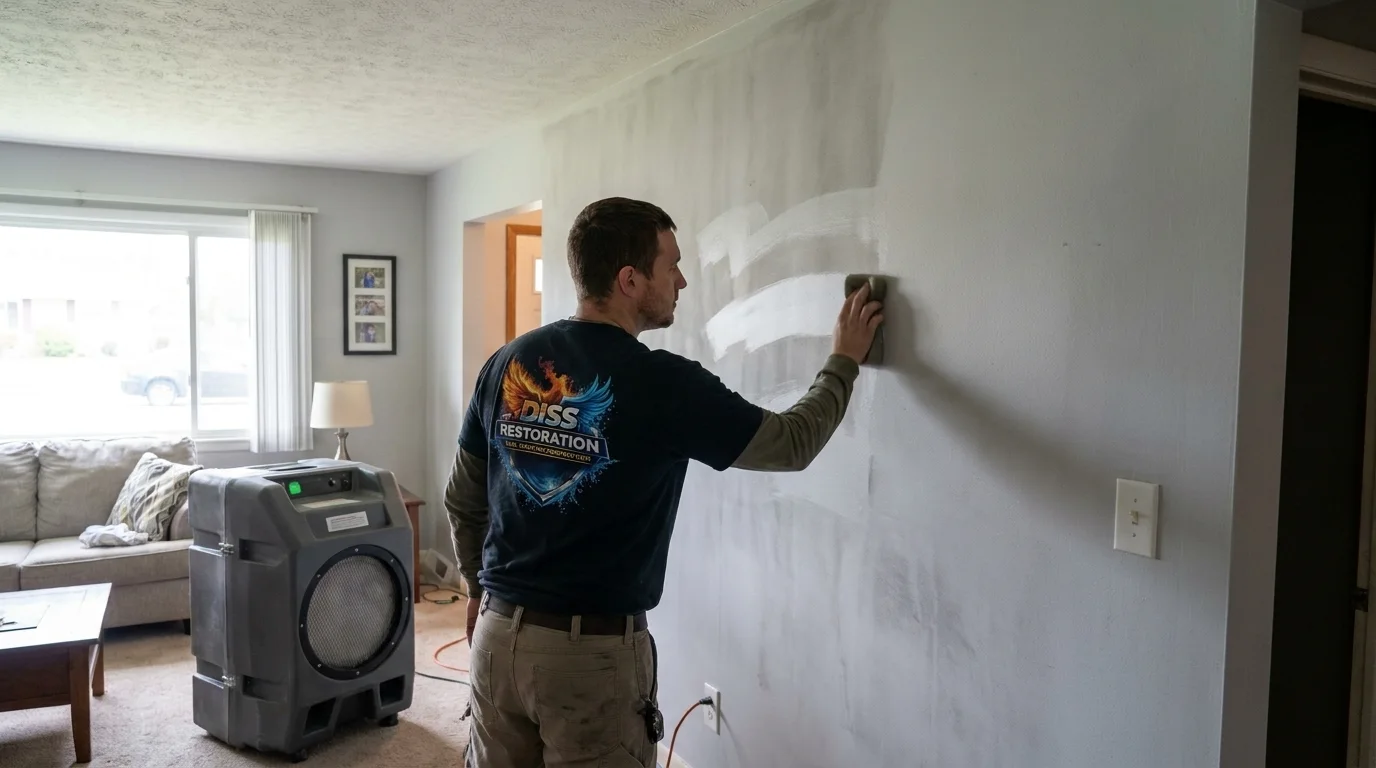
- Surface and content cleaning. Walls, ceilings, hard surfaces, and salvageable contents are cleaned with dry sponges, wet cleaning, or immersion cleaning depending on material and soot type. Porous items that can’t be fully cleaned are documented for the claim.
- Odor treatment. Thermal fogging, ozone treatment, or hydroxyl generators are used to neutralize odor at the molecular level, not just mask it. Ozone requires the space to be unoccupied during treatment; hydroxyl does not.
- Sealing and verification. Where residue has penetrated porous drywall or wood, an odor-blocking sealer is applied before repainting. A final walkthrough confirms both visible residue and odor have been addressed.
What separates a good smoke damage response from a bad one
The most common mistake is treating smoke damage like a surface cleaning job and skipping the HVAC system entirely. If ductwork isn’t inspected, soot particles recirculate every time the furnace or AC kicks on, and the smell returns weeks later. Another frequent miss is using an all-purpose cleaner on soot without first identifying whether it’s protein or synthetic residue; the wrong agent can smear soot deeper into porous surfaces like upholstery or drywall instead of lifting it out. Masking odor with air fresheners or ozone-only treatment without first removing the physical residue is also a shortcut that fails: ozone breaks down odor molecules but doesn’t clean soot off a wall. Insurance adjusters evaluating a smoke damage claim typically look for documented moisture and soot readings, photos of affected HVAC components, and an itemized list of contents that required cleaning versus replacement, so thorough documentation at every stage matters for claim approval.
What does smoke damage restoration cost?
Every smoke event is different depending on what burned, how far particles traveled, and whether HVAC systems were running. DISS Restoration provides a written scope of work before any cleaning begins so there are no surprises. Most homeowners insurance policies cover smoke damage cleanup when it results from a covered fire event, though wildfire smoke infiltration without a fire on the property may fall under a separate endorsement, so it’s worth confirming with your carrier directly.
| Scenario | Typical range |
|---|---|
| Single room, light smoke odor | $300 - $1,000 |
| Kitchen fire, contained to one area | $1,500 - $4,000 |
| Whole-house smoke infiltration | $4,000 - $10,000 |
| HVAC duct cleaning after smoke event | $500 - $1,500 |
| Contents cleaning and pack-out | $1,000 - $5,000+ |
Seasonal & regional considerations
Winter heating season in the Shenango Valley brings more space heater and furnace-related fire calls, and homes stay sealed up tight against the cold, which means smoke odor has less chance to ventilate naturally and settles deeper into fabrics and HVAC systems. Farrell’s older housing stock, much of it built during the borough’s steel industry era, often has plaster walls and original ductwork that trap soot differently than modern drywall and sealed duct systems, which affects how aggressively a crew needs to clean versus seal and repaint.
Service area
DISS Restoration handles smoke damage restoration in Farrell and throughout the surrounding Shenango Valley, including Sharon, Hermitage, and Wheatland.
If smoke odor is lingering after a fire, or soot residue is showing up on walls and fixtures, don’t wait for it to set further into your home’s surfaces. Call (724) 981-1441 to begin smoke and soot removal with a crew trained to the IICRC’s fire and smoke restoration standard.
Services We Handle
- Smoke & Soot Removal
- Soot Removal
Frequently Asked Questions
Does homeowners insurance cover smoke damage restoration?
What's the difference between protein soot and synthetic soot, and why does it matter?
Do you need to clean my HVAC system after a smoke event?
Is wildfire smoke cleanup different from fire smoke cleanup?
Is ozone treatment safe to use while we're still living in the house?
How long does smoke odor cleanup typically take?
Looking for the best smoke damage restoration company in Farrell?
DISS Restoration provides smoke damage restoration in Farrell, PA and the surrounding area, and has served local property owners since 2021. Customers rate us 4.6 out of 5 stars across 87 Google reviews. We answer calls 24/7 — call (724) 981-1441 for immediate help.
Need Smoke Damage Restoration now?
We respond 24/7 across Farrell and surrounding PA cities.