
Upholstery Cleaning in Farrell
24/7 upholstery cleaning in Farrell and surrounding areas. IICRC-certified, insurance billing accepted. Call (724) 981-1441.
A couch that still smells faintly of smoke two years after a kitchen fire, a cushion that’s gone stiff and discolored after a slow ceiling leak, a sectional that’s harbored pet odor no amount of baking soda has touched: these are the calls that don’t start with standing water but end up needing the same moisture control and extraction know-how. Upholstery holds onto soil, allergens, and odor in ways carpet doesn’t, because the padding and frame underneath trap what the surface fabric hides.
What Upholstery Cleaning actually involves
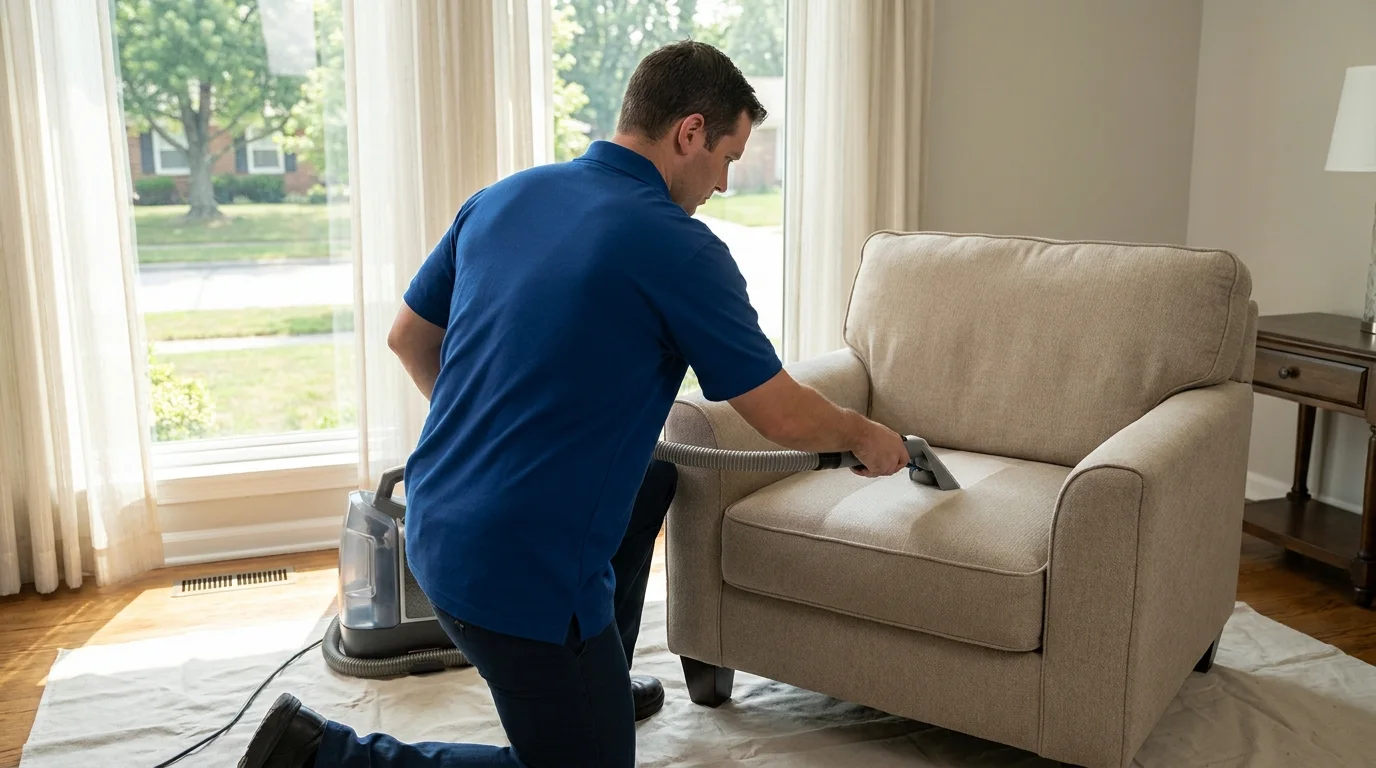
Upholstery cleaning is a fabric-by-fabric decision, not a single method applied to every piece. Cotton blends, synthetic microfiber, wool, and leather each respond differently to heat, moisture, and agitation, and the wrong choice can set a stain permanently or shrink a cushion cover. Hot water extraction (often called furniture steam cleaning, though the water itself stays well below boiling) is the standard for most fabric upholstery: a cleaning solution is injected under pressure and immediately extracted along with the loosened soil, leaving far less residual moisture than a surface shampoo. Leather upholstery cleaning takes a different path entirely, using pH-balanced cleaners and conditioners that protect the finish rather than strip it. A typical sofa or sectional takes one to two hours from pre-treatment to final extraction, with drying time of a few hours depending on fabric density and airflow in the room.
Our process
- Fabric identification and spot test. Before any solution touches the piece, we identify the fiber content and test an inconspicuous area for colorfastness and shrinkage risk.
- Pre-treatment of soil and stains. Oil-based stains, protein stains (pet accidents, food), and general traffic soil each need a different pre-conditioning agent applied before extraction.
- Hot water extraction or leather-specific cleaning. Fabric pieces go through low-moisture hot water extraction; leather pieces are cleaned and conditioned to prevent cracking.
- Odor and deodorizing treatment where needed. For smoke, pet, or mildew odor trapped in the padding, we apply an odor-neutralizing treatment rather than just masking the smell at the surface.
- Grooming and controlled drying. Fibers are groomed to restore pile direction and appearance, and airflow is set up so the piece dries evenly without re-wicking soil back to the surface.
What separates a good upholstery cleaning response from a bad one
The most common mistake is over-wetting. Upholstery padding doesn’t dry the way a carpet pad does, and a piece that’s been saturated instead of cleaned with controlled moisture can develop a musty smell from the inside out within days, long after the surface looks fine. A second mistake is skipping the fiber identification step and treating everything with the same all-purpose solution, which is how a wool blend ends up matted or a silk accent chair ends up with a permanent water ring. On leather, the failure mode is usually the opposite: using a fabric cleaner or too much water, which strips the protective finish and leaves the hide stiff. A properly run job matches the method to the material, extracts rather than just applies moisture, and sets up drying conditions before the crew leaves, not as an afterthought.
What does upholstery cleaning cost?
Most homeowners pay based on piece size, fabric type, and whether odor or stain treatment is needed beyond a standard clean. Leather and heavily soiled or odor-affected pieces typically run higher than a straightforward fabric clean. Every piece is different, which is why DISS Restoration provides a written scope before work begins rather than a flat quote over the phone. Homeowners insurance generally covers upholstery cleaning only when the soiling results from a covered loss, such as a sewage backup or fire, not routine wear or pet stains.
| Scenario | Typical range |
|---|---|
| Single sofa, fabric, routine clean | $75 - $150 |
| Sectional or multiple pieces | $150 - $350 |
| Leather upholstery cleaning and conditioning | $100 - $250 |
| Pet odor or stain treatment, per piece | $50 - $100 add-on |
| Smoke odor treatment after fire damage | $150 - $400 |
Seasonal & regional considerations
Farrell’s humid summers and damp, heating-season winters both work against upholstery drying time. In summer, high ambient humidity means pieces cleaned without adequate airflow can stay damp longer and are more prone to odor regrowth. In winter, closed-up homes running forced-air heat dry fabric faster but also circulate more dust and allergens into upholstery between cleanings, which is worth factoring into how often fabric pieces in heavy-use rooms get serviced.
Service area
DISS Restoration cleans upholstery for homeowners and property managers throughout Farrell and the surrounding Mercer County communities, including Sharon, Hermitage, and Sharpsville.
If a sofa, sectional, or leather chair in your home has a lingering odor, a stubborn stain, or just hasn’t been cleaned since it was delivered, call (724) 981-1441 to schedule furniture steam cleaning or leather conditioning with a crew that treats the fabric type correctly the first time.
Frequently Asked Questions
Does homeowners insurance cover upholstery cleaning?
Can smoke odor really be removed from a couch, or just masked?
Is steam cleaning safe for leather furniture?
How long does a cleaned sofa take to dry?
Will cleaning remove old stains or just the surface soil?
Looking for the best upholstery cleaning company in Farrell?
DISS Restoration provides upholstery cleaning in Farrell, PA and the surrounding area, and has served local property owners since 2021. Customers rate us 4.6 out of 5 stars across 87 Google reviews. We answer calls 24/7 — call (724) 981-1441 for immediate help.
Need Upholstery Cleaning now?
We respond 24/7 across Farrell and surrounding PA cities.
Related Coverage
- Our Restoration Services
- Contact DISS Restoration
- Upholstery Cleaning in Austintown
- Upholstery Cleaning in Boardman
- Upholstery Cleaning in Campbell
- Upholstery Cleaning in Canfield
- Upholstery Cleaning in Girard
- Upholstery Cleaning in Greenville
- Upholstery Cleaning in Grove City
- Upholstery Cleaning in Hermitage
- Upholstery Cleaning in Hubbard
- Upholstery Cleaning in Mercer
- Upholstery Cleaning in Mineral Ridge
- Upholstery Cleaning in New Castle