
TL;DR: The best reconstruction contractor in Farrell, PA is registered under Pennsylvania’s Home Improvement Consumer Protection Act, carries general liability insurance, gives you a written scope of work before any demo starts, and can work directly with your insurance adjuster on the Xactimate estimate. If the same company handled your water or fire mitigation, ask whether they also do the rebuild, it often means one point of contact and one continuous paper trail for your claim.
If your basement just got dried out after a burst pipe, or your kitchen is sitting at studs after a fire, you’re now facing a second decision that matters just as much as who stopped the damage: who puts the house back together. That contractor touches your drywall, your flooring, your cabinets, and your framing, and a bad choice here means a second mess months later. Here’s what to actually check before you sign anything in Farrell or the surrounding Shenango Valley.
What does a reconstruction contractor do after mitigation is finished?
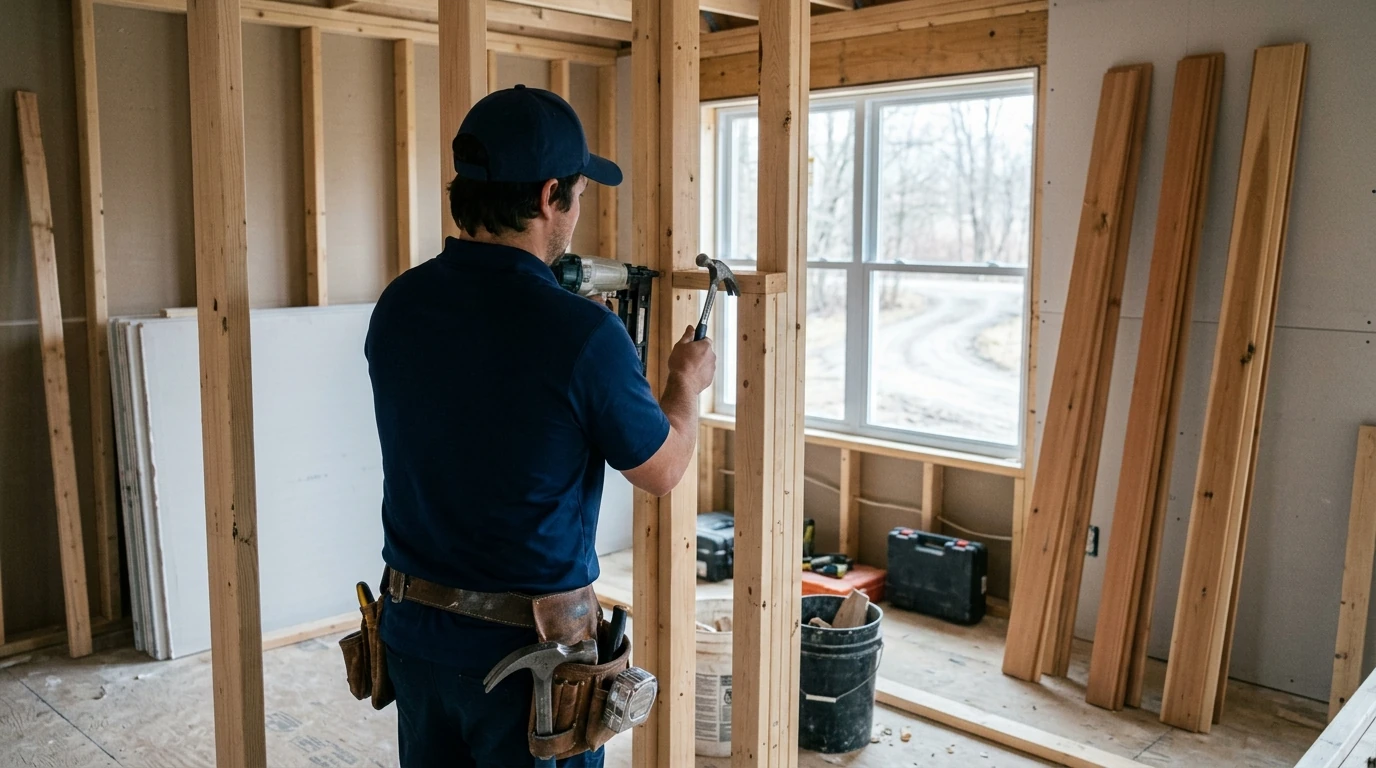
A reconstruction contractor rebuilds what mitigation removed, framing, insulation, drywall, flooring, cabinets, trim, and paint, starting after the water or fire crew finishes drying, demo, and cleanup. Mitigation stops the damage from spreading; reconstruction is the build-back phase that gets the space livable again.
On a typical water loss, that might mean replacing a section of wall framing, hanging and finishing new drywall, and reinstalling flooring. On a fire loss, it can be a full room rebuild including cabinetry and paint matching. Our reconstruction services page walks through the scope in more detail, and our earlier post on what reconstruction means after water or fire damage covers the basic phases if you want the fuller picture.
Should you hire one company for mitigation and the rebuild, or two separate contractors?
Using one company for both phases usually means fewer handoffs, one scope of work, and one company accountable to your insurance adjuster from the first call to the final walkthrough. Splitting the job between a mitigation company and a separate general contractor can work, but it adds a seam where responsibility, and sometimes the paper trail, can get lost.
If you do use two contractors, make sure the mitigation company’s final documentation, drying logs, moisture readings, demo photos, gets handed directly to whoever does the rebuild. That record is what your adjuster uses to approve the reconstruction line items, and gaps in it slow the claim down.
DISS Restoration handles both phases for water damage, fire damage, and related losses in Farrell, which means the crew that documented the loss is the same crew pricing the rebuild. That continuity matters more than most homeowners expect until they’ve lived through a claim with two separate companies pointing at each other.

What credentials should a reconstruction contractor in Farrell, PA actually have?
At minimum, check for Pennsylvania Home Improvement Consumer Protection Act (HICPA) registration, proof of general liability insurance, and a willingness to put the full scope of work in writing before any demo begins. Most residential home improvement work in Pennsylvania legally requires this registration, and the PA Attorney General’s home improvement page explains what it covers and how to verify a contractor.
Beyond the legal minimum, look for industry training specific to restoration-linked rebuilds. DISS Restoration is an IICRC Certified Firm, holds water, fire and smoke, and structural drying credentials through the Institute of Inspection, Cleaning and Restoration Certification, is attested as licensed and insured, and operates on a 24/7 basis for emergency calls. The company also carries a 4.7 Google rating across 99 reviews as of this writing. None of that replaces doing your own homework, but it’s a reasonable starting checklist for any contractor you’re considering.
How does a reconstruction contractor work with your insurance adjuster?
A reconstruction contractor who’s used to insurance work writes the rebuild scope in Xactimate, the line-item estimating software most carriers use, so the numbers match what your adjuster expects to see. That shared format is what gets a supplemental claim approved faster instead of bounced back for clarification.
In practice, that means photos tied to specific line items, material and labor pricing that reflects current local rates, and a scope that separates what mitigation already paid for from what the rebuild still needs. If your adjuster has questions about why a wall needs full replacement instead of patching, the contractor should be able to answer directly from the documentation, not guess after the fact.
What’s a realistic timeline from tear-out to move-back-in?
Most single-room rebuilds, drywall, paint, and flooring, typically run one to three weeks once materials are on hand, while a full kitchen or multi-room rebuild after a larger loss often takes four to eight weeks depending on cabinet lead times and permit requirements. These are general industry ranges, not a quote, since every loss involves different materials, square footage, and how fast insurance approves the scope.
Ask any contractor you’re considering for a written timeline tied to their actual scope of work, not a verbal estimate. Lead times on cabinets and specialty flooring are usually the biggest variable, not the labor itself.
What red flags should you watch for when hiring a reconstruction contractor?
The two biggest red flags are pressure to sign an assignment of benefits (AOB) before you understand what you’re signing away, and a demand for a large deposit before any work or materials are committed. An AOB hands your insurance claim rights to the contractor, which can limit your ability to dispute the settlement later, and it’s worth reading closely or having your insurer explain before you sign.
Other warning signs: no written scope of work, no proof of HICPA registration when asked, and a contractor who won’t put a start date or timeline in writing. A legitimate contractor will walk you through the scope, the materials, and the payment schedule before asking for anything upfront.
If you’re still in the mitigation phase and haven’t started the rebuild conversation yet, our water damage restoration page and fire damage restoration page cover what happens before reconstruction starts. For general remodeling questions once the rebuild is underway, remodeling after restoration covers common decision points.
If you’re ready to get a written scope for your rebuild, call DISS Restoration at (724) 981-1441 or request an assessment through our contact page. The team serves Farrell and the surrounding Shenango Valley, including Sharon, Hermitage, and Sharpsville, and can walk the property with you before any demo starts.
About DISS Restoration
DISS Restoration is an IICRC Certified Firm serving Farrell, Pennsylvania and the surrounding Shenango Valley since 2021, operating on a 24/7 basis with 4.7 stars across 99 Google reviews. The crew handles water damage restoration, fire and smoke damage restoration, reconstruction, and general contracting, along with mold remediation, sewage cleanup, and related mitigation services, under IICRC water, fire and smoke, and structural drying training. This guide was prepared with the DISS Restoration team.
Video Transcript
Your basement just dried out, or your kitchen is down to the studs after a fire. Now you need someone to rebuild it right. The contractor who rebuilds touches your drywall, flooring, cabinets, and framing. A bad choice here means a second mess later. Reconstruction starts after mitigation finishes drying and demo. It covers framing, insulation, drywall, flooring, cabinets, trim, and paint. Using one company for both mitigation and rebuild means one scope of work and one team accountable to your adjuster. Check that your contractor is registered under Pennsylvania’s Home Improvement Consumer Protection Act and carries general liability insurance. Look for IICRC certification in water, fire, and structural drying, plus a written scope of work before any demo begins. A good contractor writes your rebuild scope in Xactimate, so your numbers match what your insurance adjuster expects to see. Most single room rebuilds take one to three weeks. Full kitchen rebuilds often take four to eight weeks depending on materials. Watch for contractors who skip written estimates, ask for full payment upfront, or can’t explain their documentation to your adjuster. Ask questions, check credentials, and get everything in writing. Call DISS Restoration at (724) 981-1441 to schedule an assessment.